


As Director of Veterinary Services at HSSC, Melisa Kauffman, DVM, oversees care for anywhere between 200 to 350 animals every day. The ones that come into the shelter are among the most vulnerable in Summit County: the abandoned, the sick, the neglected and injured.
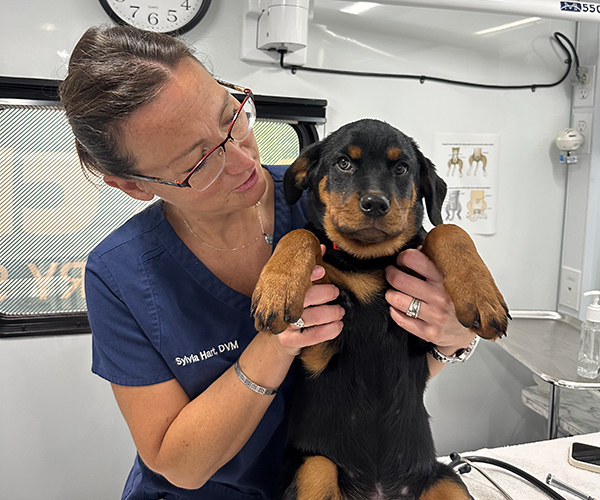
But, using the MABEL mobile veterinary vehicle, Dr. Kauffman and her colleague, Dr. Sylvia Hart, are able to reach another vulnerable pet population in Summit County: pets in low-income communities whose owners can’t afford basic veterinary care.
MABEL, which stands for Making Animals Better and Enriching Lives, is a 28-foot mobile clinic that brings spay/neuter surgeries and vaccinations directly to neighborhoods across Summit County three days a week. Originally launched in 2021, the program was redesigned in April 2025 to focus exclusively on families who qualify for assistance programs like WIC, SNAP, or other government aid.
“When we did a redesign on the MABEL services, we said we really want to help people who can’t afford it otherwise and are not going to be able to do this unless we’re there,” said Dr. Kauffman. “So we brainstormed the areas within Summit County that are the greatest need and have the population that needs those services the most.”
The approach is intentionally modest but strategic. “We started very basic this year. We said, we want to do spay and neuter, and we want to do vaccinations. Then we’re going to get a feel for what other needs are in the community. So coming into 2026, we can look at addressing a bigger subset of needs.”
It’s working. MABEL is on track to serve approximately 1,200 animals by its one-year relaunch anniversary, a 200% increase over the number of animals served last year. Treating animals early, before they are able to reproduce or before they get sick and diseased, means fewer strays on the streets, and fewer neglected and vulnerable animals that end up in a shelter.
To keep the MABEL program running smoothly, volunteers and monetary donations are vital. “We’re always looking for ways to utilize volunteers on clinic days for check-in, proof of income assistance, or providing food from our pet pantry,” Dr. Kauffman explained. “We have some volunteers that make sure our instruments are clean, help lay things out, pack things up, restocking, whatever we need.”
Any monetary donations that are directed towards the MABEL help fund surgeries and vaccinations for pets who need them most. Visit the HSSC website to support the MABEL fund today!