

When Melisa Kauffman, DVM, Director of Veterinary Services at HSSC, walks through the HSSC shelter doors each morning, she’s asking one question: “What can we do to get you adopted?”
Kauffman, who goes by Dr. K – along with fellow veterinarian Dr. Sylvia Hart and a small team of vet assistants, vet techs, and a practice manager – oversees the care of anywhere between 200 to 350 dogs, cats, and small animals on any given day. Her morning starts with rounds through the entire shelter.
“I walk through the entire shelter looking at every animal, and I have a mindset of, why are you still here and what can we do to get you out of here?” she says. “I’m finding out what this animal is waiting on, as well as making sure there’s no signs of any infectious disease or changes in behavior that would indicate that they have something going on.”
For simple issues, Dr. K starts treatment immediately. More complex cases go on a whiteboard for the team to address. “Tuesday through Thursday are our surgery days. We primarily do spay and neuter, however, we do a lot of mass removals,” she says. “We will do enucleation (surgical removal of the eye), amputations, pretty much anything soft tissue.”
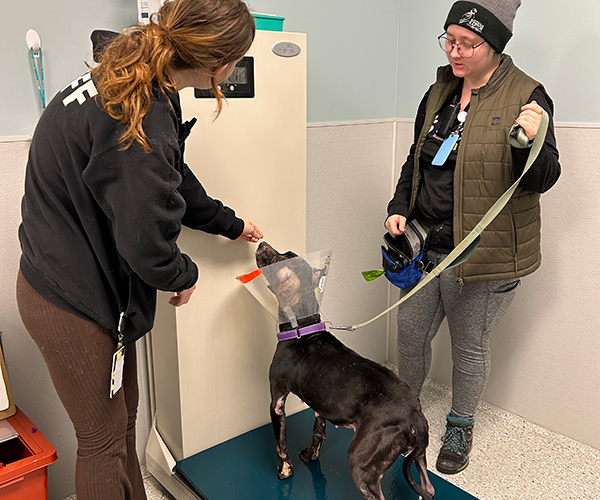
The new shelter on Portage Trail in Akron includes an onsite x-ray machine—a significant upgrade. “In our previous location, we did not have the luxury of having an x-ray machine,” Dr. K explains. “So this allows us to get more real-time answers and get the animals headed in the right direction, sooner.”
Speed matters when it comes to getting animals adopted. HSSC has seen a 30% increase in animal intake over the last year primarily due to the new shelter’s central location and higher visibility in Summit County. “We try to stay on top of animals moving through our system and getting adopted as quickly as possible,” says Dr. K. “I really don’t like to see them get stuck in any aspect of it, because that allows us to take in that extra 30%. If we’re not moving our intakes through, we can quickly become overwhelmed.”
With the additional intakes, medical expenses are up 12%, mainly due to increased medication and equipment costs. Individual donors have helped by funding equipment like the radiology and dental x-ray machines.
Dr. K’s wish list for the future includes incubators for post-surgery animals who have difficulty regulating their temperature, and an ultrasound unit.
With an estimated 2,500 animals coming through this year, donations are critical. “Donors are coming forward, and they are funding things today that in the past, we wouldn’t have been able to do,” says Dr. K., recalling the spinal surgery on a dog named Brownie. “Fifteen years ago, that wouldn’t have been possible. But now we have the ability to get specialists involved.”
To make a donation to HSSC that would help fund medical equipment or general shelter needs, visit our donation page.